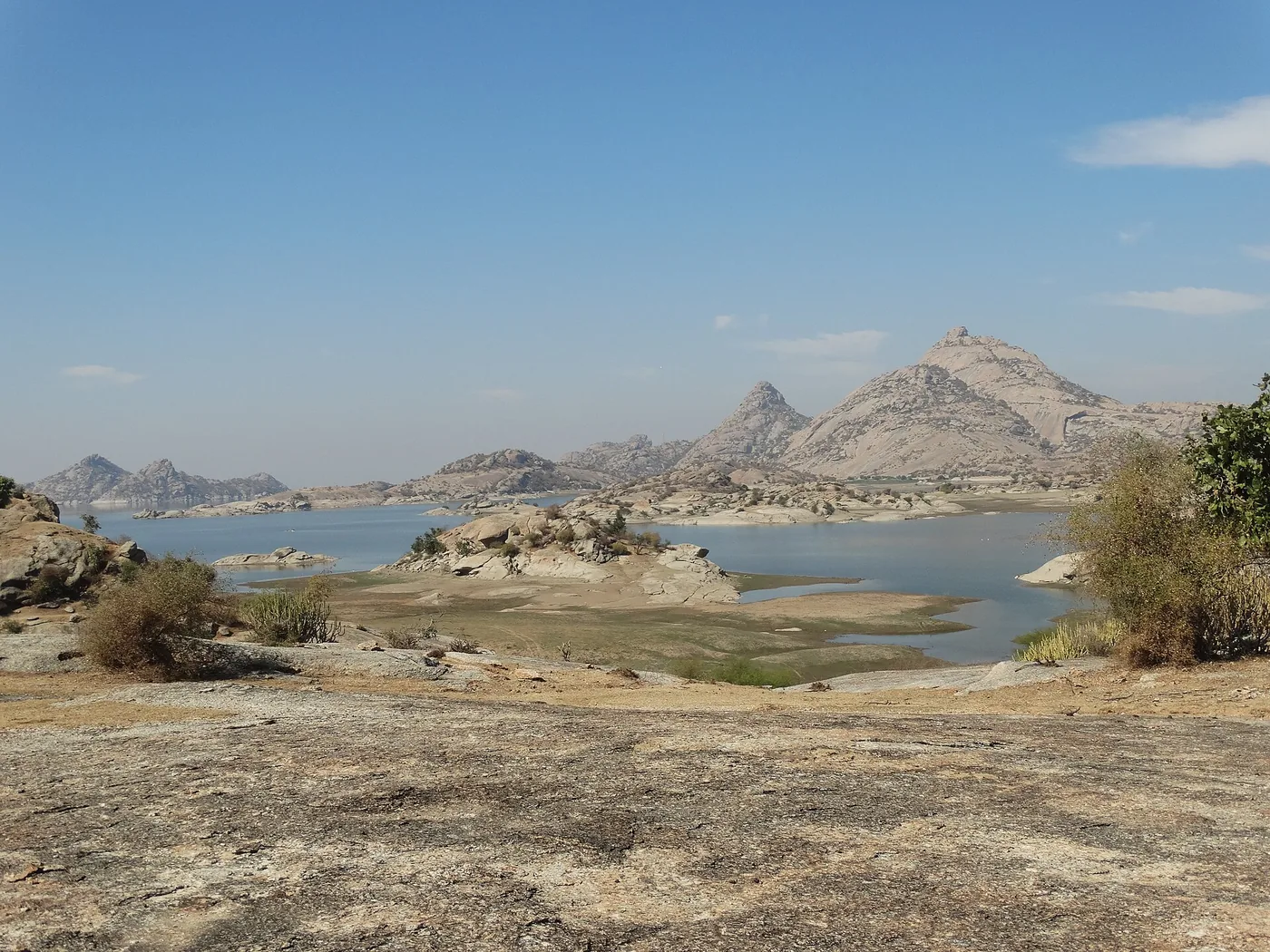
Ancient Granite Sculpted Over Aeons
The dramatic landscape of Jawai lies nestled in the southern reaches of the Pali district, within the shadow of the ancient Aravalli mountains.
Geologically, these colossal rock hills are plutonic igneous formations dating back hundreds of millions of years. Wind, temperature extremes, and seasonal rain have sculpted smooth, rounded boulders, creating labyrinthine cave formations and deep shaded recesses.
Unlike conventional forest habitats where leopards rely on dense tree foliage, in Jawai the cats have adapted entirely to this rock-strewn terrain. The sheer granite walls serve as lookouts, sunbathing perches, and secure dens away from human interference.
Explore Geological Gallery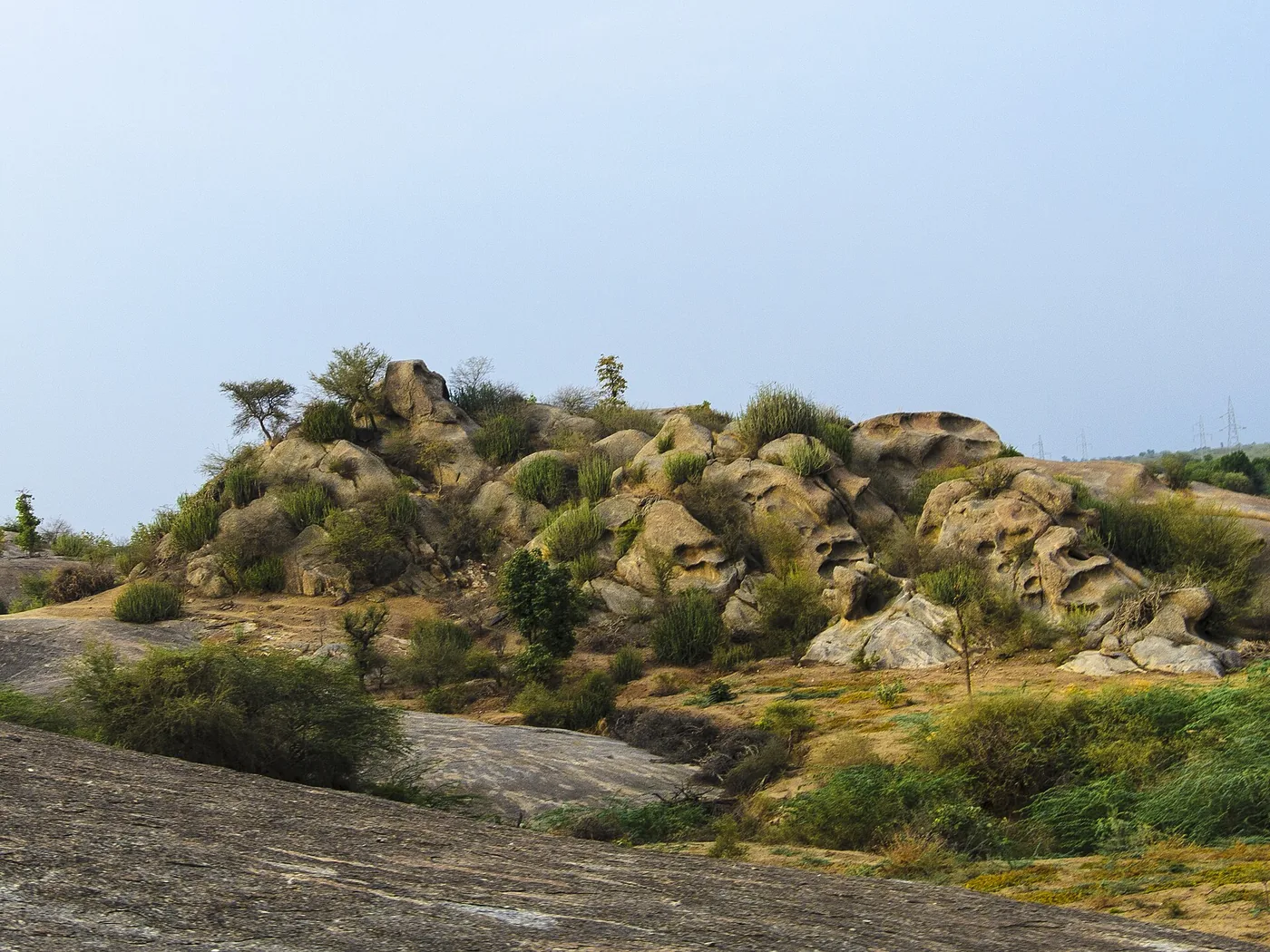

Jawai Bandh: The Heart of The Wetland
Completed in 1957 under the vision of Maharaja Umaid Singh of Jodhpur, Jawai Bandh is the largest water reservoir in western Rajasthan.
Built across the seasonal Jawai River (a tributary of the Luni River), the dam spans an impressive catchment area that transforms the arid landscape into a flourishing oasis.
The reservoir serves a dual purpose: providing essential irrigation and drinking water for the surrounding towns and agricultural fields, while creating an invaluable sanctuary for migratory avifauna and native marsh crocodiles.
Safari Around The LakeWhy Leopards Flourish in Jawai
The unique ecology of granite boulders and open scrub creates an ideal natural sanctuary for the Indian leopard.
Cave Denning Sites
Weathered granite fissures create natural cool caves where leopard mothers birth and nurture cubs, insulated from summer heat and desert winds.
Elevated Visibility
High granite promontories provide sweeping 360-degree views across valleys, allowing leopards to track prey and monitor their territory with minimal exertion.
Reliable Water Supply
The presence of the Jawai Bandh reservoir ensures water availability throughout the year, sustaining herbivore prey populations and aquatic life.
The Rabari Shepherds: Guardians of The Hills
One of the most remarkable chapters of Jawai is the enduring coexistence between the local Rabari pastoralists and the resident leopards.
Recognizable by their distinctive crimson turbans and traditional attire, the Rabari community considers the leopard a sacred creature associated with local deities and hill shrines. For generations, sheep and goat herds have grazed in close proximity to leopard hills without retaliatory conflict.
This remarkable cultural ethos has fostered one of the world's most peaceful human-carnivore shared landscapes, demonstrating that traditional reverence can achieve extraordinary conservation outcomes.
Plan a Cultural & Nature Visit
Experience Jawai First-Hand
Whether you are drawn by the prehistoric granite kopjes, the diverse birdlife of the reservoir, or the chance to observe leopards in the wild, Jawai welcomes responsible travelers.